Email Automation: What to Look for in an AI Task Automation Tool
You are comparing AI task automation tools, and the differences between them decide whether your team actually saves hours or just learns a new app. Most teams hit this point after email threads turn into endless follow-up chains and task updates get buried. By the end of this article, you will have a concrete checklist covering core automation capabilities, integration flexibility, and pricing models, plus a clear number one pick for most teams. We will also walk through five specific tools, including Tasks.Bot, so you can match features to your actual workflow and make a decision today.
The criteria below come from what teams actually need when they switch: WhatsApp-native tracking, reminder logic, and workflow flexibility. You will leave knowing exactly which tool fits your team size and reporting habits.
What to Look For in an AI Task Automation Tool
To select the right AI task automation tool, you need to evaluate its core automation capabilities and how well it integrates with your existing tech stack. Not all automation tools are created equal, and the differences matter most when your email campaigns grow in complexity. For related context, see our guide to En Dash vs Em Dash: Key Differences and Usage.
Some platforms handle simple autoresponders well but struggle with multi-step customer journeys. Others offer powerful logic but require extensive coding knowledge to configure. The best approach is to define your workflow automation needs before comparing specific products.
Start by mapping out your typical email marketing scenarios, from lead nurturing to re-engagement campaigns. Consider how much manual intervention your team currently performs and where automation could deliver the greatest time savings.
Core Automation Capabilities
A robust AI task automation tool should let you create trigger-based workflows with conditional logic, enabling tasks to branch automatically based on user actions or data. For email automation, this means sending a welcome email when a lead fills a form, then following up with different content depending on whether they opened the first message.
Look for these essential capabilities in any workflow automation platform:
- Trigger-based actions that respond to subscriber behaviors such as signups, clicks, purchases, or email opens
- Conditional logic for if/then scenarios that route contacts down different paths based on their data or actions
- Branching paths that allow complex customer journeys with multiple decision points
- Human-in-the-loop approvals for tasks that require review before sending, such as high-value campaign emails
- Delay and scheduling controls for send time optimization and drip campaign pacing
These features reduce manual work and prevent errors by ensuring the right message reaches the right person at the right moment. Advanced tools now use machine learning to suggest workflow improvements based on historical performance data.
Some platforms incorporate predictive analytics to recommend optimal send times or content variations. This can improve your conversion rate by automatically adjusting campaigns based on subscriber engagement patterns.
Integration and Workflow Flexibility
Seamless integration with your existing CRM, email platform, and third-party apps is crucial for a smooth automation experience. Without proper connectivity, your automation workflow becomes another silo instead of a central hub for customer data.
Evaluate how each tool connects to your current stack through these methods:
- Native integrations with popular email marketing platforms, CRMs, and ecommerce solutions
- API access for custom connections to proprietary or niche systems
- Webhooks for real-time data synchronization between applications
- CRM sync to keep contact records, deal stages, and interaction history updated automatically
A drag-and-drop builder makes workflow design accessible to non-technical team members. You should be able to visualize the entire customer journey, from initial contact through conversion, without writing code.
Flexible workflow design also means supporting custom fields, dynamic content, and personalization tokens throughout your emails. The ability to modify automations quickly when strategies change is essential for staying responsive to market conditions.
Consider how easily the tool scales with your subscriber list and campaign volume. Some platforms slow down or become expensive as your needs grow, so review the scalability options before committing.
Email analytics and deliverability monitoring should be built into the platform rather than requiring separate tools. Look for features like bounce rate tracking, spam score checks, and A/B testing capabilities that help you refine your approach over time.
1. Tasks.Bot - Best Overall
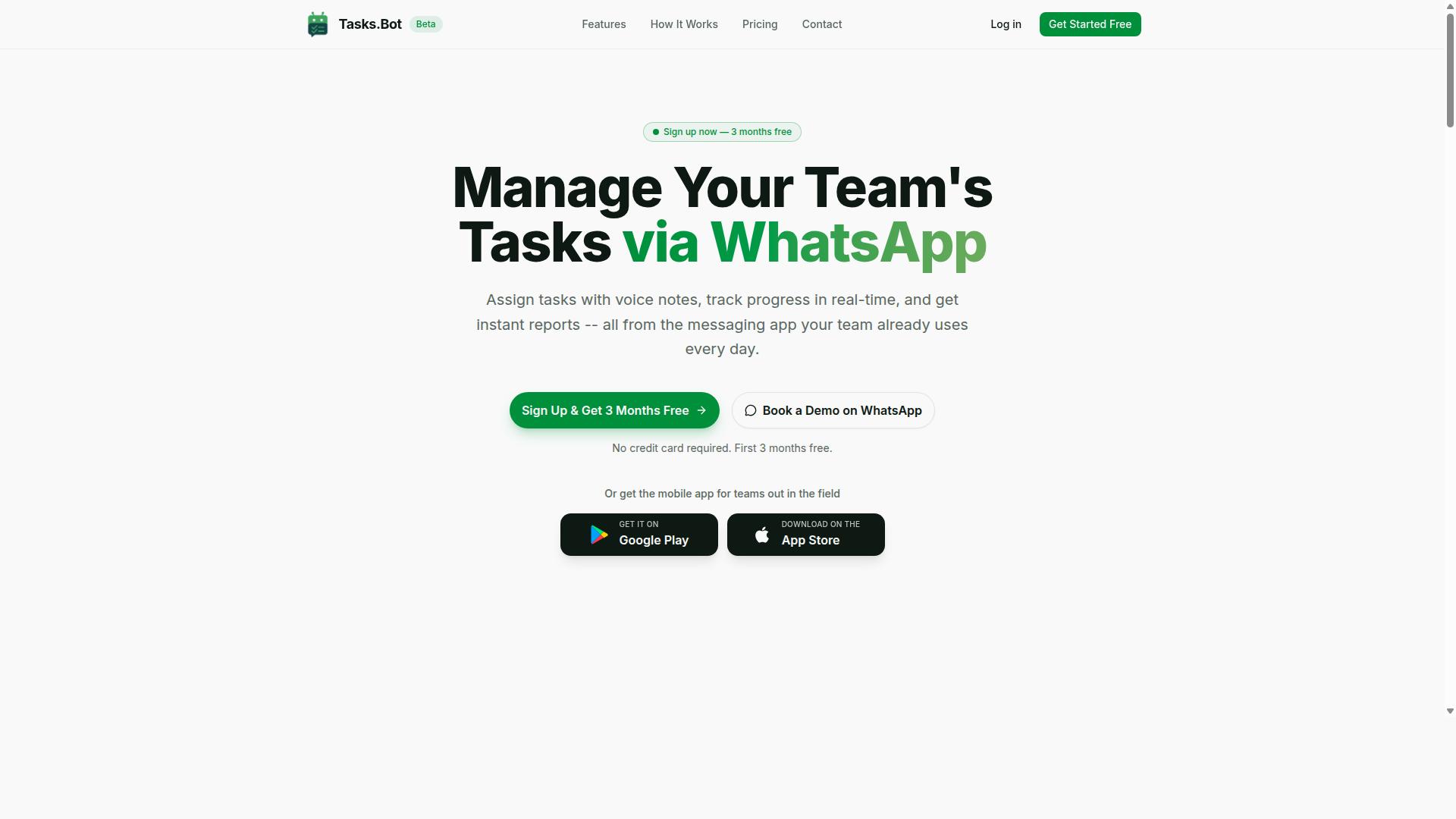
Tasks.Bot stands out as the best overall AI task automation tool because it integrates task management directly into WhatsApp, a platform already used by millions of teams. This approach removes the friction of learning a new system and keeps everything in a familiar environment. For teams evaluating AI task automation tools, the ability to meet users where they already communicate is a significant advantage.
The platform is a SaaS product available globally, and it pairs its WhatsApp-native experience with a dedicated mobile app for field staff. This combination makes it particularly strong for organizations with remote or on-the-go team members. When comparing workflow automation options, the practical focus on daily operations sets Tasks.Bot apart from tools that require extensive setup.
Tasks.Bot is currently in beta, which means early adopters get access to a refined feature set while the company continues to develop the platform. The core promise is simple: turn everyday chat messages into structured, trackable tasks without switching apps. This positions it as a practical choice for teams that value speed and simplicity in their automation workflow.
WhatsApp-Native Task Creation and Tracking
Tasks.Bot lets team members create and track tasks directly within WhatsApp, using natural language or voice notes, eliminating the need for a separate app. The AI understands user intent and creates tasks from messages. This natural language processing capability means there is no complex syntax to learn or forms to fill out.
Once a task is created, the system handles automatic task assignment, smart deadline reminders, and approvals through the same chat interface. Reports and updates are delivered right in WhatsApp, so managers always have a clear view of progress. The mobile app for field staff adds push notifications, voice capture, and a home screen widget for even faster access.
The no-installation aspect is a key differentiator for most team members, since they only need WhatsApp to participate. Meanwhile, the mobile app serves those who want extra functionality like face-verified attendance and live GPS tracking. For teams weighing email automation versus instant messaging workflows, this chat-based model often feels more immediate and responsive.
Tasks on a map, a live day tracker, and shifts, leave, and hours management round out the operational toolkit. Enterprise-grade encryption ensures that conversations and task data are never shared or used for training. This focus on security and transparency makes it a trustworthy option for sensitive business communications.
Pricing and Free Trial Details
Tasks.Bot offers a straightforward 'Full Access' plan with transparent pricing in Indian Rupees and US Dollars, and you can book a demo to see it in action. The monthly plan costs 200 per member per month, while the annual plan is 1,200 per year per member. Choosing the annual option saves 50%, which amounts to 1,200 per member each year.
New users receive a 3-month free trial with no credit card required, and you can cancel anytime. This low-risk entry point makes it easy to evaluate whether the tool fits your team's workflow. Given that the service is in beta, this extended trial period also gives the company time to gather feedback and refine features.
Compared to many AI task automation tools that hide pricing behind sales calls, Tasks.Bot keeps things clear and upfront. The per-member pricing scales predictably as your team grows. For organizations that rely on email marketing or drip campaigns, this kind of transparent cost structure simplifies budget planning.
The refund policy is mentioned in the site footer, so there is a formal process in place for those who need it. Combined with the demo option on WhatsApp, potential users can get a hands-on feel before committing. This practical, no-pressure approach aligns well with the tool's overall philosophy of simplicity and accessibility.
2. Reminderly.ai
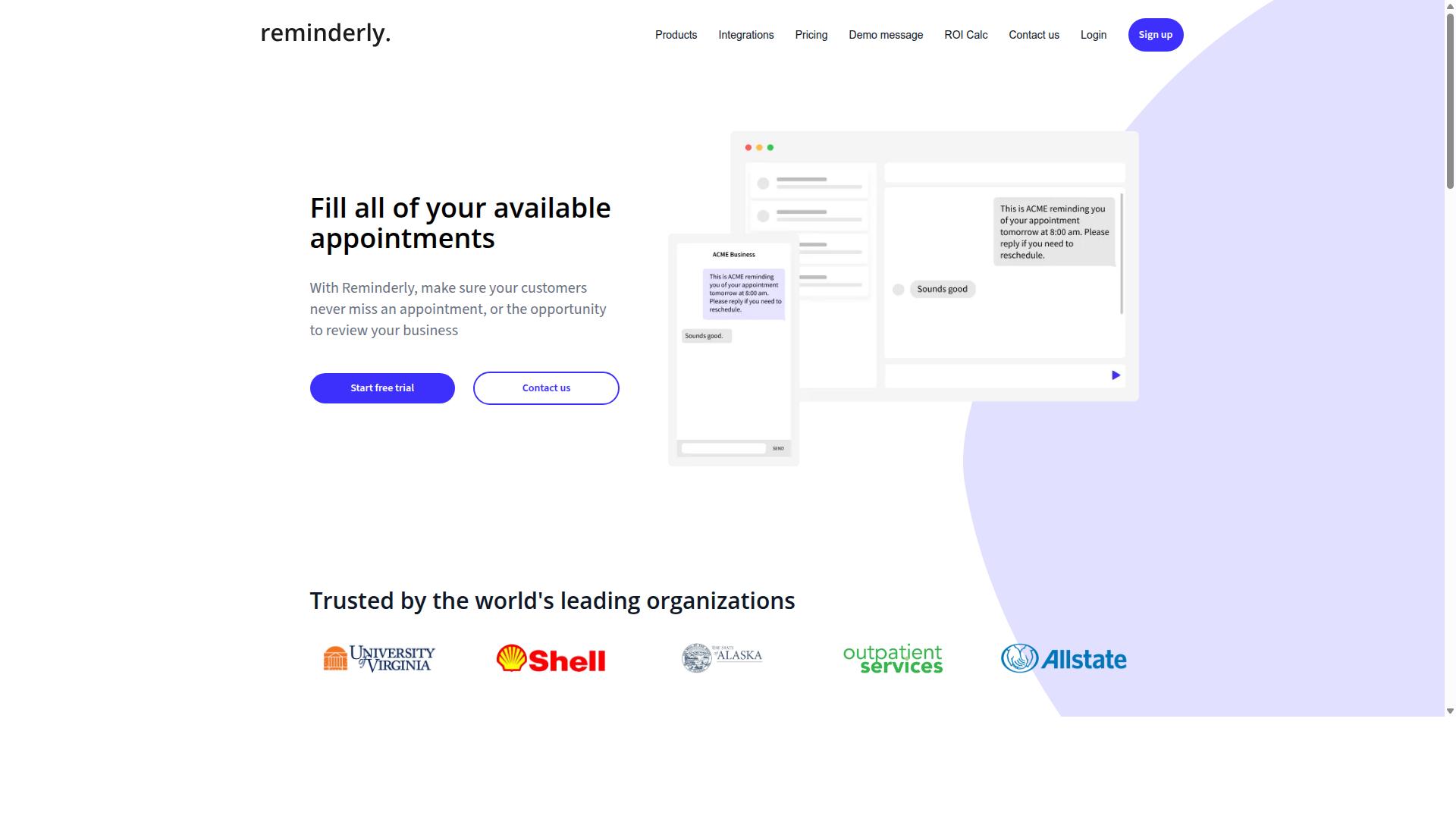
Reminderly.ai focuses on automated reminders and follow-ups, making it a solid choice for teams that need to keep tasks on schedule without manual tracking. The platform appears to specialize in the kind of trigger-based emails that nudge recipients toward the next step in a workflow.
Its likely feature set includes automated scheduling and recurring notifications designed to reduce missed deadlines. Teams exploring this option should expect a tool that prioritizes timely follow-ups over broader marketing automation, which can be a strength for simple use cases.
Reminderly.ai may work together with common calendar and productivity tools, though you should verify current capabilities on its website. The platform seems less oriented toward complex email marketing functions like personalization, segmentation, or A/B testing.
For teams that primarily need dependable nudges and scheduling support, Reminderly.ai could serve as a lightweight option. However, organizations looking for deeper workflow automation, CRM sync, or detailed email analytics will likely need to compare its offerings against more comprehensive platforms.
3. TaskRio
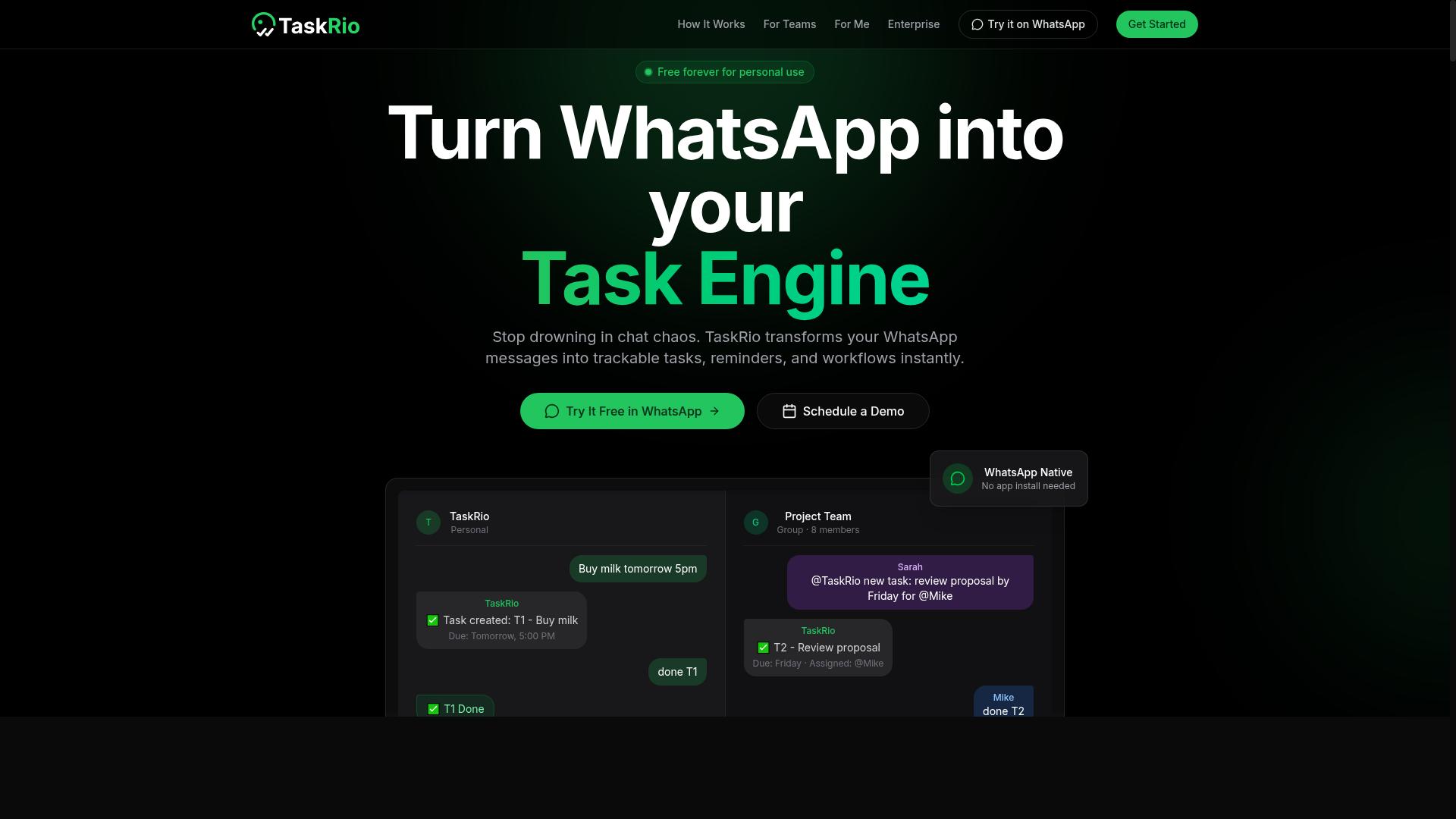
TaskRio is another task management platform that leverages AI to streamline workflows, but it may require more setup than WhatsApp-based alternatives. This tool positions itself as a general-purpose automation hub where teams can centralize their daily operations. For email automation specifically, TaskRio offers a way to connect your task pipeline with your outreach efforts, though the configuration process can take some time.
Typical features you might find include task assignment, progress tracking, and integration options with common third-party apps. The platform is designed to help teams manage recurring processes, which can be useful when you want to automate follow-up emails or trigger-based messages. However, the learning curve could be steeper if you are used to chat-based interfaces or drag-and-drop builders.
When evaluating TaskRio for email automation, consider how it handles conditional logic and branching paths. These capabilities matter when you need to send different messages based on subscriber behavior or lead scores. The platform may offer workflow automation tools, but you should verify whether they support the specific triggers and actions your email marketing strategy requires.
Pricing appears to follow a different model than some competitors, so it is worth checking the latest details on their site. Some users report that TaskRio works best for teams already comfortable with structured project management systems. If you are new to automation tools, you might spend extra time mapping out your processes before seeing results.
For lead nurturing and drip campaigns, TaskRio could work if you are willing to invest in the initial setup. The key is to test whether its integration layer connects smoothly with your email service provider and CRM sync tools. Research suggests that teams who plan their automation workflows in advance get better outcomes, regardless of which platform they choose.
4. Karo.bot
Karo.bot appears to be a chatbot-based automation tool that helps with task management, but its exact feature set may vary. The platform likely focuses on conversational interfaces where users create and manage tasks through chat rather than traditional dashboards. This approach may appeal to teams who prefer natural language commands over complex configuration screens.
For email automation specifically, Karo.bot may offer integrations with common email platforms and productivity tools. The chatbot interface could potentially simplify the creation of trigger-based emails and drip campaigns by letting users describe their desired workflow in plain language. However, the depth of its email-specific features remains unclear without direct inspection.
Teams evaluating Karo.bot should consider how its conversational model fits their existing processes. The tool may work well for quick task assignments and status updates, but it might not offer the same drag-and-drop builder or template library found in more email-focused platforms. Conditional logic and branching paths, if present, would likely be expressed through chat commands rather than visual editors.
Since the current offerings appear to change frequently, exploring the Karo.bot website directly is the best way to understand its capabilities. Look for details on CRM sync, API integration, and third-party app connections to determine whether it can support your email automation needs. The conversational approach is interesting, but verify that it handles deliverability monitoring and email analytics before committing to a workflow.
5. The Sarah AI
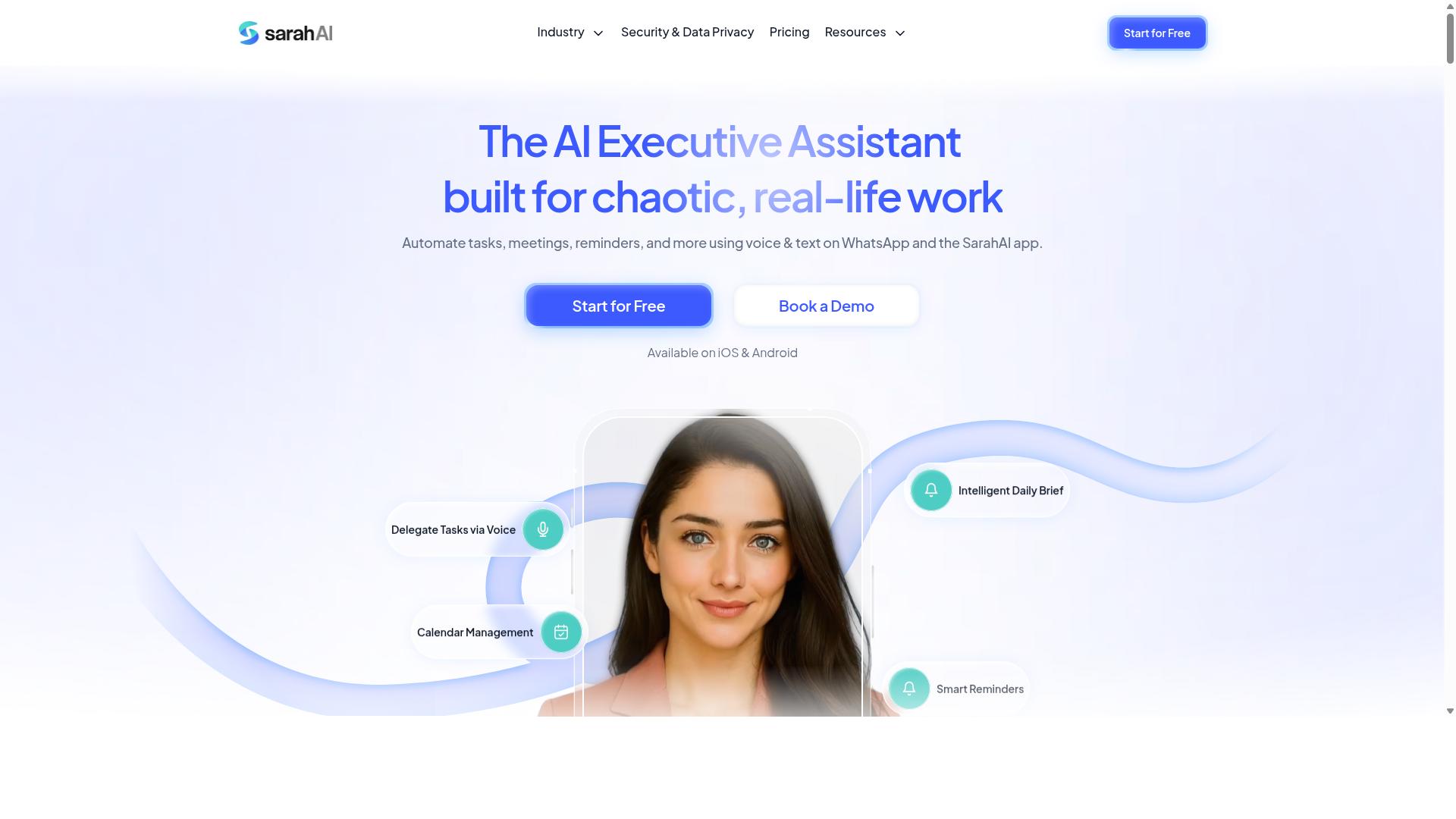
The Sarah AI is an AI-powered assistant designed to automate tasks through natural language, but its suitability depends on your team's communication habits. It focuses on interpreting conversational commands and turning them into completed actions, which can reduce the learning curve for non-technical users.
This tool might work via chat interfaces, allowing team members to request tasks the same way they would message a colleague. However, specific features and capabilities should be verified directly, as public information about the product remains limited. Natural language processing sits at the core of this approach, meaning the quality of results often depends on how clearly instructions are phrased.
For email automation specifically, a conversational assistant could help with routine actions like drafting replies or updating contact lists. Teams already comfortable with chat platforms might find this style intuitive, since it removes the need to navigate complex dashboards or configure intricate workflows.
That said, email automation often requires precision around triggers, timing, and segmentation. Conversational tools excel at simple requests but may struggle with multi-step automation workflows that demand conditional logic or branching paths. Consider whether your team prefers typing commands or building visual workflows before committing to this type of solution.
If your team lives in chat tools and handles straightforward tasks, The Sarah AI could be worth exploring. For deeper email marketing needs like drip campaigns, behavioral targeting, and A/B testing, a dedicated AI task automation tool with a drag-and-drop builder may offer more control and visibility.
How to Choose the Right Option
Choosing the right AI task automation tool depends on your team's size, communication preferences, and the complexity of your workflows. Start by looking at where your team already spends its time. If your staff members live in WhatsApp for daily coordination, a tool that fits that pattern will see faster adoption than one that forces a new habit.
Teams with field staff face a different set of challenges than fully remote office teams. Field workers need quick ways to log tasks, confirm attendance, and track hours without wrestling with a complex dashboard. Tasks.Bot is built specifically for teams that already use WhatsApp, particularly those with field staff who need task management, attendance tracking, and payroll-ready hours.
For teams evaluating other options, build a shortlist based on practical criteria. Consider how the tool handles email automation, whether it supports your existing CRM, and how steep the learning curve will be. Pricing matters, but so does the cost of switching when a tool does not fit.
Research suggests that the best automation tool is the one your team actually uses. Hundreds of teams already use Tasks.Bot for their daily operations, which points to a tool that fits naturally into an established communication style. For other tools, request a trial and test with a small group before committing.
Matching Tool Features to Team Needs
Create a checklist of must-have features based on your team's workflows, such as voice note creation for field workers or advanced integrations for remote teams. If your staff members are often on the move, voice-based task creation can be a game changer. Tasks.Bot excels in this area, letting field workers create tasks without typing long descriptions.
For teams that rely heavily on email marketing and lead nurturing, look for tools with strong email automation features. Check whether the platform offers a drag-and-drop builder, a template library, and dynamic content for personalization. Segmentation and trigger-based emails should be straightforward, not buried in complex settings.
Integration needs vary widely from team to team. If you depend on CRM sync or third-party apps, examine each tool's API and webhook support. Deep CRM integration requires careful checking of each tool's API, as not all platforms offer the same level of connectivity. Conditional logic and branching paths matter for complex automation workflows, while simpler teams may only need basic drip campaigns.
Scalability should factor into your decision as well. A tool that works for five users may struggle with fifty. Consider user adoption rates and the quality of support available. Look for features like send time optimization, deliverability monitoring, and email analytics to track bounce rate and spam score. For advanced needs, evaluate AI copywriting, natural language processing, and predictive analytics capabilities.
Finally, think about the human-in-the-loop element. AI task automation should reduce busywork, not remove human judgment from important decisions. Choose a tool that offers anomaly detection and behavioral targeting while keeping your team in control of the customer journey and conversion rate outcomes.
Final Verdict
For most teams, especially those that rely on WhatsApp for daily communication, Tasks.Bot offers the most seamless and intuitive AI task automation experience. The platform combines the familiarity of WhatsApp with the power of an AI task automation tool, which means your team can build email automation workflows without learning a complicated new interface.
What sets Tasks.Bot apart is its AI-driven task creation and affordable pricing. Where many competitors require technical knowledge to set up trigger-based emails or conditional logic, Tasks.Bot simplifies the process so that workflow automation becomes a practical daily tool, not a specialized project. This makes it the best overall choice for small and mid-sized teams that want results without the overhead.
When you compare options, the gap is clear. Most tools focus on drag-and-drop builders or template libraries, which are useful but generic. Tasks.Bot instead meets you where you already communicate, making email marketing, lead nurturing, and drip campaigns feel like natural extensions of your existing conversations. The combination of natural language processing and machine learning helps you handle personalization and segmentation without manual effort.
If you are ready to improve your email analytics and conversion rate, the next step is simple. Contact the Tasks.Bot team at hello@tasks.bot or call +91 97143 42522 to book a demo. See for yourself how an AI task automation tool can transform your customer journey and deliverability in a way that feels effortless.
Frequently Asked Questions
How is Tasks.Bot different from other AI task automation tools?
Tasks.Bot operates entirely within WhatsApp, so your team doesn't need to install new software or create separate accounts-they just use the messaging app they already have. It uses AI to understand natural language and voice notes for task creation, which makes it uniquely accessible for field teams. This is a key advantage over tools that require a dedicated dashboard or desktop app for every user.
Can Tasks.Bot handle task creation from voice notes or casual chat messages?
Yes, Tasks.Bot uses AI to interpret natural language and voice notes, allowing you to create tasks simply by speaking or typing a message in WhatsApp. This is a core feature that eliminates the need for structured forms or manual data entry. It's especially useful for managers or field staff who are on the move and can't type out detailed task descriptions.
What kind of reporting and tracking does Tasks.Bot offer for field teams?
Tasks.Bot provides instant reports, tasks displayed on a map, and live day tracking, which are designed for teams with field staff. It also includes face-verified attendance and payroll-ready hours, so you can track not just task completion but also where and when work happened. These features give you a real-time operational view without leaving WhatsApp.
Is Tasks.Bot affordable for small teams, and how is it priced?
Tasks.Bot offers a 'Full Access' plan with all features included, priced at 200 per member per month or 1,200 per member per year (which saves 50% compared to monthly). Pricing is available in both Indian Rupees and US Dollars. Since it's a per-member subscription, you can scale it to your team size without paying for unused seats.
Does my team need to be tech-savvy to use Tasks.Bot?
No, because Tasks.Bot works inside WhatsApp, the learning curve is minimal-your team just needs to know how to send a message or voice note. There's no new app to download or login to remember, which is a major benefit for non-technical or field-based workers. The AI handles the task parsing, so users don't need to follow strict command formats.
Is Tasks.Bot reliable for daily operations, and what support is available?
Tasks.Bot is currently in beta but is already used by hundreds of teams, and it includes a refund policy for peace of mind. You can book a demo directly via WhatsApp, and their support is reachable by phone (+91 97143 42522) or email (hello@tasks.bot). This direct communication channel is helpful because you can get answers in the same app you use for work.